
Primary keyword: Qwen Image 3.0 API

Qwen Image 3.0 API: Status and Integration Guide

A practical guide to live Qwen Image 3 model access, server-side authentication, task polling, durable storage, safety and production pricing.

Current status

Qwen Image 3.0 was officially released on July 21, 2026. This site offers verified Qwen Image 3 model access alongside user-selectable Qwen Image 2 Standard and Pro options.

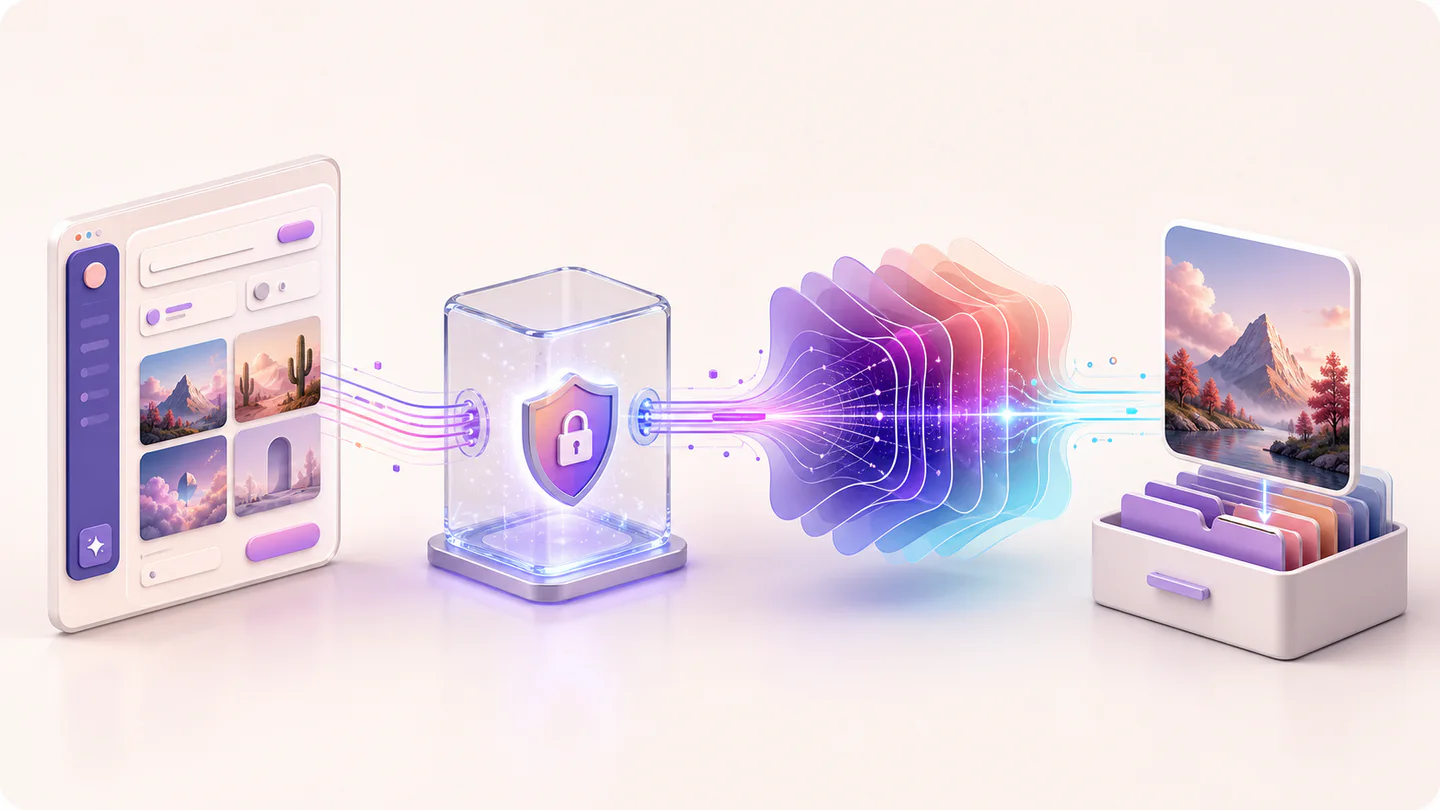
Conceptual Qwen Image 3.0 API workflow from web application through secure server and generation engine to stored image

Illustrated case

A production-safe request path

The browser sends only validated user options to your server. Your server protects provider credentials, creates and tracks the asynchronous task, then copies the completed asset to durable storage before returning a stable URL.

Illustrative workflow image—not an unedited Qwen output or a benchmark result. Use it to understand the method, then validate your own prompts and check the linked official sources.

01

Prepare the integration boundary

Keep model IDs and credit costs in server-side configuration. The browser should submit a prompt and options to your own API rather than exposing a provider key.

  • Authenticate every paid generation request
  • Validate prompt length, model and aspect ratio server-side
  • Store provider keys outside the client bundle
  • Rate-limit creation and polling endpoints
02

Treat generation as an asynchronous job

Create a local task, deduct credits atomically, submit to the provider, then poll until success or failure. Failed tasks should follow an explicit credit-reversal policy.

  • pending → processing → success or failed
  • Persist provider task IDs for recovery
  • Copy finished assets to durable object storage
  • Never trust price or credit values sent by the browser
03

Use a verified Qwen Image 3 model ID

A verified commercial endpoint exposes the alibaba/qwen-image-3/text-to-image model ID. The integration accepts Chinese and English prompts up to 800 characters, supported image sizes, prompt expansion, safety checking, seeds and common image output formats.

04

Persist every successful image outside temporary provider URLs

Provider output URLs can expire. Download successful files on the server, validate content type and size, upload them to private object storage, and save the durable URL with the task record.

  • Do not expose provider API keys in browser code
  • Copy outputs to R2 or compatible S3 storage
  • Use signed URLs for private user assets
  • Retry storage separately from model generation
05

Operate the production integration safely

Keep the model ID, input allowlist and credit cost on the server. Monitor submission failures, queue latency, moderation blocks, refunds and storage copies, while retaining a disabled 2.0 configuration for emergency rollback.

06

Estimate Qwen Image 3 API cost per usable asset

The cheapest generation is not always the lowest-cost deliverable. Estimate cost from provider price, retries, moderation failures, storage, bandwidth and the percentage of outputs that pass review. Track cost per approved image for each use case instead of comparing headline API prices alone.

  • Record provider charge and internal credit cost separately
  • Measure retries per approved product, poster or social asset
  • Include durable storage and download bandwidth
  • Set budget alerts before increasing concurrency
07

Use a production launch checklist

Before sending customer traffic to a Qwen Image 3 API integration, run fixed prompts through every supported ratio and language. Verify timeouts, duplicate submissions, failed-task refunds, moderation responses, temporary URLs and provider outages. A small recorded test suite prevents expensive regressions after a provider update.

  • Test idempotency so retries do not double-charge users
  • Log latency, provider request ID and normalized error code
  • Verify output ownership and retention terms for your plan
  • Keep a documented rollback model and status message

Frequently asked questions

Is there an official Qwen Image 3.0 API?

Qwen officially released the model on July 21, 2026. Alibaba Cloud Model Studio documents qwen-image-3.0-pro as invite-only testing, while this site uses a separately verified commercial provider endpoint. Availability, model IDs and prices can differ by provider.

Is Qwen Image 3.0 available through an API?

Yes. A verified commercial endpoint exposes alibaba/qwen-image-3/text-to-image. It is the default here, with Qwen Image 2 Standard and Pro available as explicit alternatives.

Should the provider key be stored in Vercel?

Yes, store it as a server-only encrypted environment variable and never prefix it with VITE_ or return it to the browser.

Can I switch providers without rebuilding the whole site?

Yes, if provider-specific requests and responses stay behind one internal adapter with normalized tasks, errors, costs and output storage.

How much does the Qwen Image 3 API cost?

There is no single universal price. Official and third-party providers can use different model IDs, access tiers and billing units. Confirm the live provider price, then include retries and storage when calculating cost per approved image.

Can I call the Qwen Image 3 API directly from a browser?

Do not expose a provider key in browser code. Send authenticated requests to your own server, validate the model and options there, then create and monitor the provider task from the server.

Continue reading

Browse all Qwen Image 3.0 guides

Try the guided image workspace

Start with a plain-language prompt, choose a format, and refine the result from your private studio.